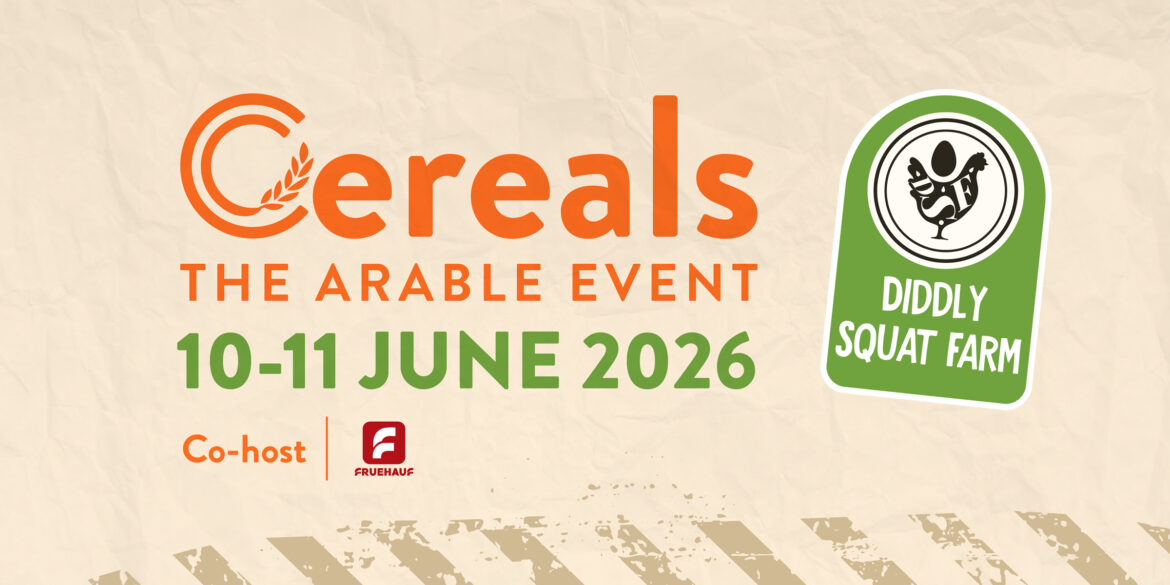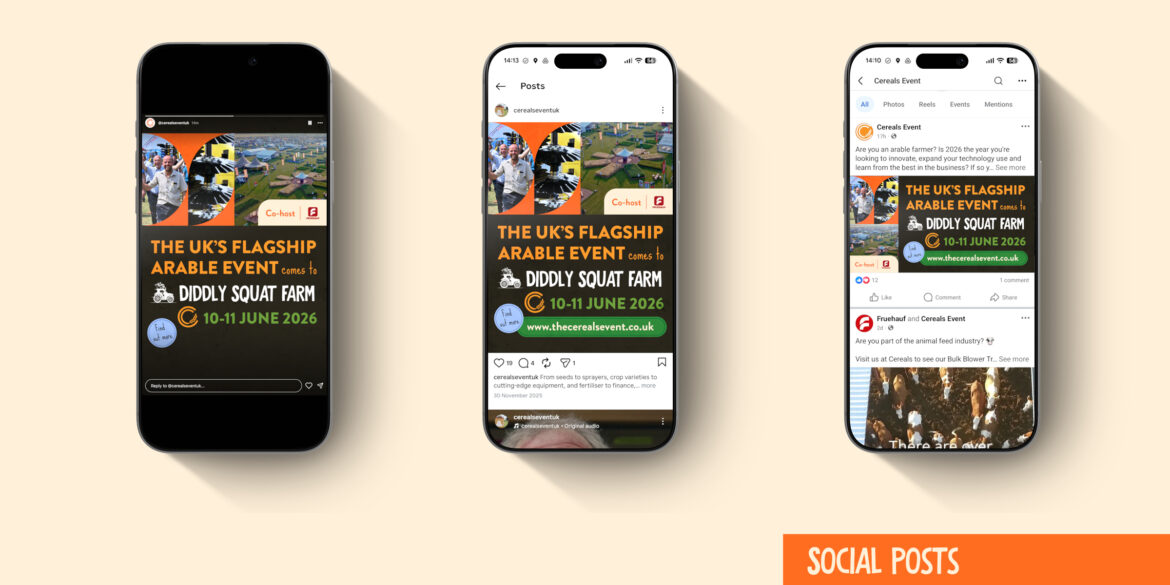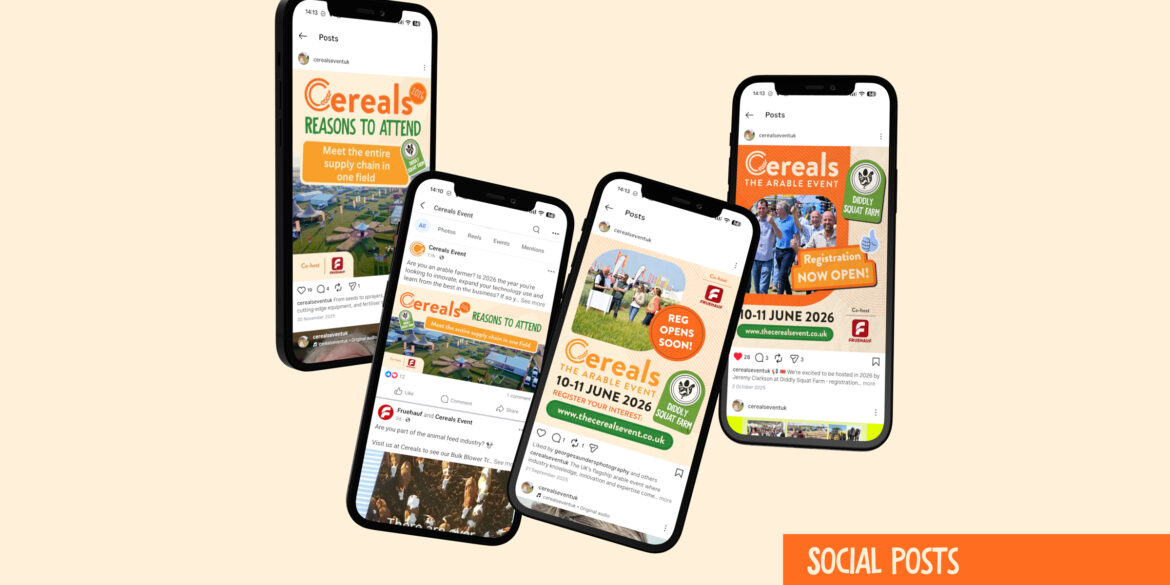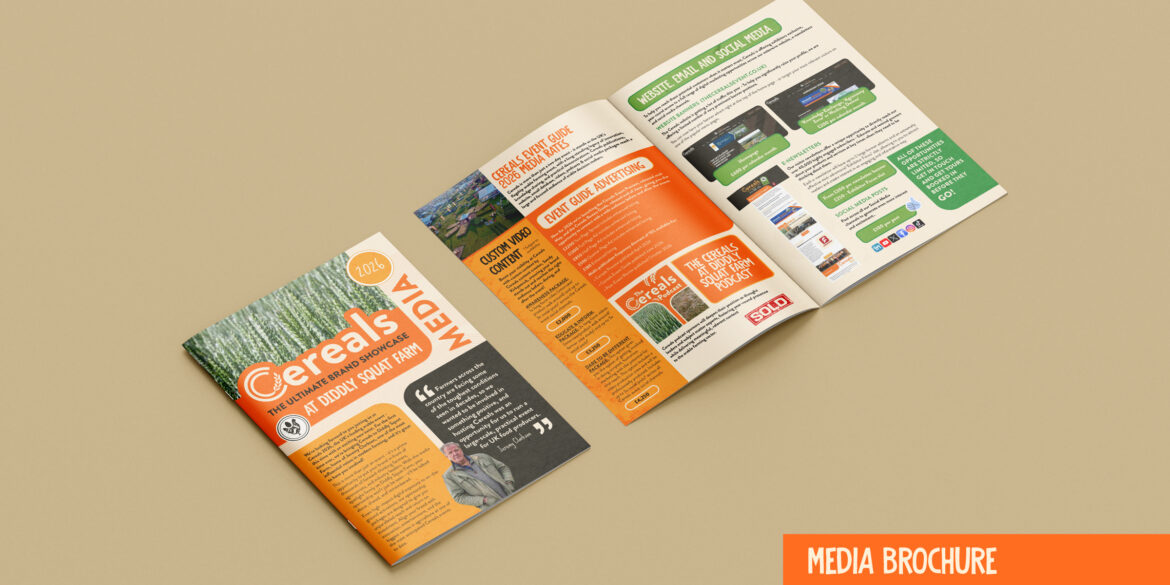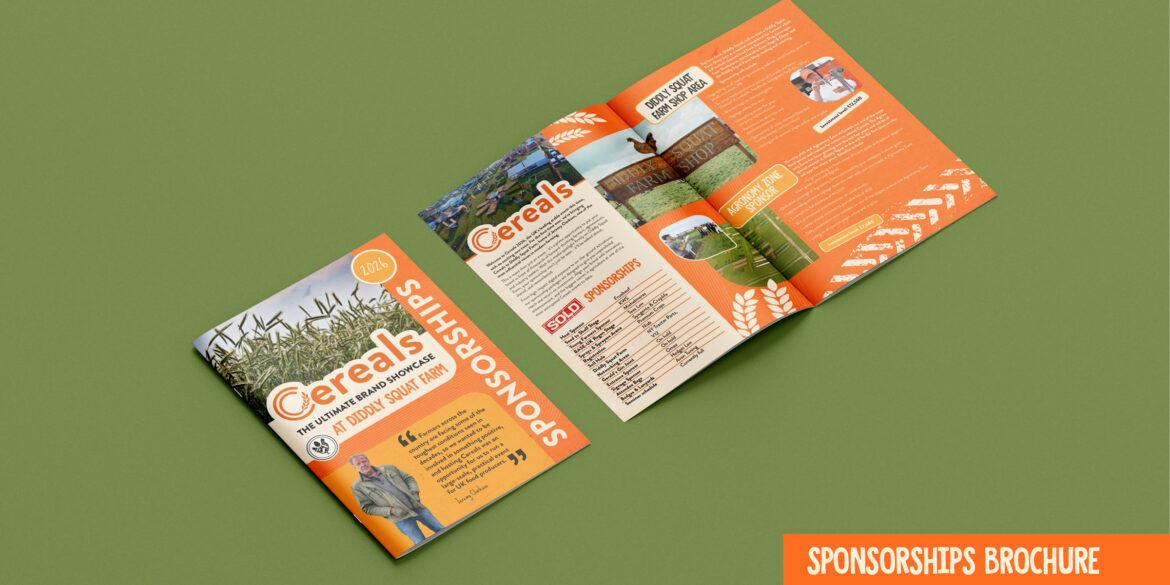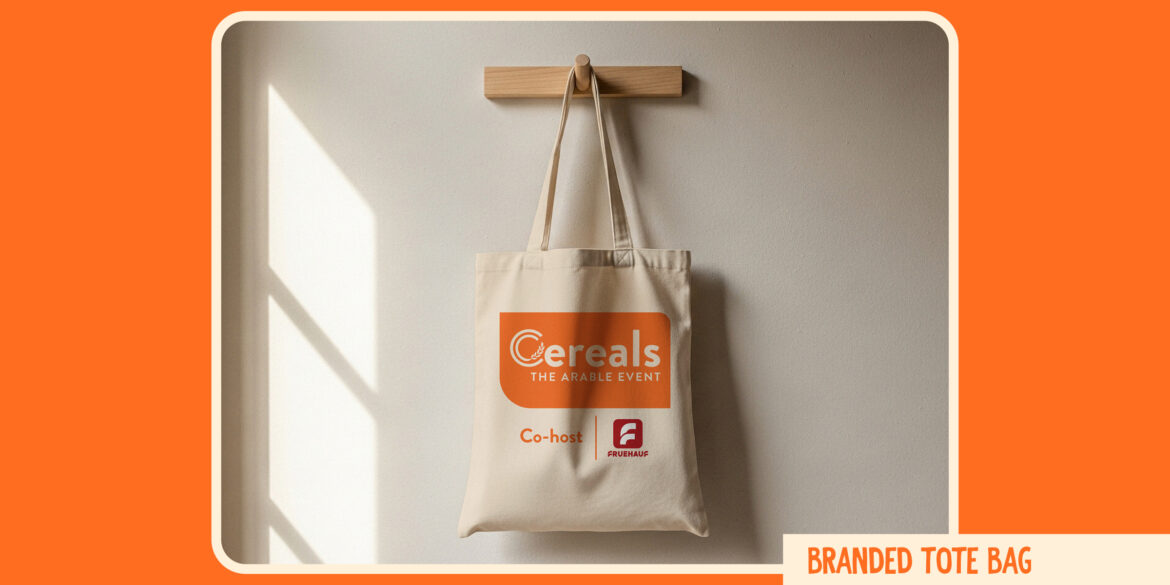
When Cereals announced that the 2026 event would be hosted at Diddly Squat Farm (yes, that Diddly Squat Farm, from Jeremy Clarkson’s hugely popular Amazon series), it was always going to be a big moment. This is the kind of agricultural event graphic design project that doesn’t come along very often. Working with marketing manager Sarah Murray, I was brought in to handle the visual side of everything: social media graphics, media and sponsorship brochures, event guides, signage, podcast graphics, tote bags – the list goes on.
Cereals has an established logo and brand colours, but the design had started to feel a little stale. My job was to create something that could carry the event forward beyond 2026, while also nodding (just nodding) to the folksy aesthetic of Clarkson’s Farm. Too much and it would have felt like a costume; too little and the connection would be lost entirely.
It’s worth noting that Cereals is strictly for the farming community. You have to prove you work in the industry to get a ticket, and the organisers have gone to considerable lengths to ensure that remains the case – particularly this year, when the Diddly Squat connection will inevitably draw interest from well beyond the agricultural world.
Before picking up a pencil, I read around the event, its history and its audience. Cereals has deep roots in the farming and arable science community, and it was important that any refresh still spoke to that world. I decided to extend the colour palette slightly – the existing colours were solid, but a few additional tones gave us more flexibility, especially useful for a project with this many touchpoints. From there, I landed on a direction I’d describe as playful but grounded: a balance of science and folksy charm.
Tramline-inspired patterns, used sparingly in backgrounds, add depth and a quiet nod to the arable landscape without shouting about it. Subtle textures bring warmth without tipping into anything too rustic or twee. Bauhaus-influenced illustrative elements modernise the look, and sticker and stamp-style graphics give us a flexible toolkit for highlighting key information across different formats.
I also made a small but (to me) very satisfying tweak to the logo itself. The original design featured a standalone ‘C’ icon sitting before the word “Cereals” — which meant it read as “C Cereals” rather than the intended logo mark integrated with the wordmark. I worked the C icon directly into the lettering so it reads cleanly as one cohesive logo. Simple, but one of those things you can’t un-see once you’ve spotted it.
The project is still live – event guides, previews and signage are all still to come before the event itself in June. But as a piece of agricultural event graphic design, it’s been a really enjoyable brief: a high-profile client, a fun cultural hook, and a genuine design challenge in getting the balance right between heritage and freshness.